
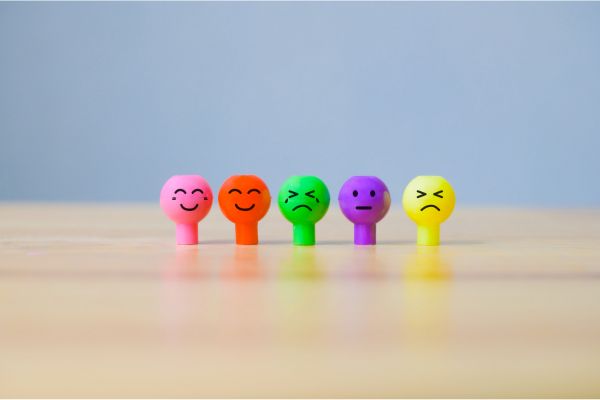
Navigating your emotional palette: a spectrum of feelings.
By marchmeena29 | Canva
Each color and expression reflects the rich diversity essential for emotional intelligence.
How to Improve Emotional Intelligence is key to recognizing how this vital skill colors our lives, shaping our experiences and interactions in ways that are both profound and subtle. Understanding and expressing our emotions can transform our lives, fostering deeper connections, personal growth, and a richer experience of the world.
This article delves into the concept of the emotional palette, exploring how our emotions influence us, the importance of emotional intelligence, and practical strategies for how we can harness this understanding to enhance our emotional health and improve our emotional intelligence.
The Spectrum of Emotions
Emotions are a fundamental part of being human. They inform our decisions, motivate our actions, and connect us to others. The emotional spectrum is vast, encompassing everything from joy and love to anger and sadness. Each emotion has its own unique hue, contributing to the rich tapestry of our emotional lives and offering opportunities for understanding emotional complexity. Developing emotional intelligence helps us appreciate this spectrum.
Primary and Secondary Emotions
Primary emotions, such as happiness, sadness, anger, and fear, are universal and often arise in response to specific stimuli. These emotions are typically straightforward and easily recognizable. Secondary emotions, on the other hand, are more complex and often result from the interplay of primary emotions. For example, jealousy might be a combination of fear and anger. A deeper understanding here is key to effectively improving emotional intelligence. Such insights are foundational in learning how to improve emotional intelligence.
The Role of Emotions in Our Lives
Emotions serve several critical functions. They act as a barometer, providing feedback about our environment and experiences. Positive emotions like joy and contentment signal that things are going well, while negative emotions like anger and sadness alert us to potential problems. Emotions also motivate behavior, driving us to seek pleasure, avoid pain, and pursue our goals. Cultivating emotional intelligence allows us to interpret these signals effectively, a crucial step in learning how to improve emotional intelligence.
The Key Skills to Improve Emotional Intelligence
Emotional intelligence (EI) is the ability to recognize, understand, and manage our own emotions and the emotions of others. It involves several key skills that can help us navigate the complexities of our emotional landscape. Cultivating strong emotional intelligence enhances our overall well-being. To truly improve emotional intelligence, focusing on these skills is essential.
Cultivating Self-Awareness: The Cornerstone to Improve Emotional Intelligence
Self-Awareness is the foundation of emotional intelligence. It involves being conscious of our own emotional states and how they influence our thoughts and behaviors. By recognizing our emotions, we can better understand their origins and address them constructively. Developing self-awareness is crucial for improving emotional intelligence. To cultivate it, practice mindfulness, reflect on your reactions, and keep an emotional journal.
Mastering Self-Regulation: Managing Your Emotional Responses Effectively
Self-Regulation is the ability to manage our emotions in healthy ways. This means not only controlling impulsive reactions but also finding appropriate outlets for our feelings. Techniques suchs as deep breathing, mindfulness, and journaling can help us process emotions without becoming overwhelmed. Effective emotional regulation is a hallmark of emotional intelligence, and mastering it is key to how to improve emotional intelligence.
Developing Empathy: Connecting with Others
Empathy is the capacity to understand and share the feelings of others. It allows us to connect with people on a deeper level, fostering compassion and understanding. By putting ourselves in others’ shoes, we can better appreciate their perspectives and respond with kindness. Empathy is another vital component of emotional intelligence, and practicing active listening skills and perspective-taking can significantly develop this skill. This aspect is fundamental to how to improve emotional intelligence in interpersonal contexts.
Honing Social Skills: Building Stronger Relationships
Strong social skills enable us to build and maintain healthy relationships. These skills include effective communication, conflict resolution strategies, and the ability to work collaboratively. By honing our social skills, we can navigate interpersonal dynamics more effectively and create supportive, positive environments. They are an outward expression of strong emotional intelligence, and deliberate practice in these areas is fundamental to how to improve emotional intelligence.
Fostering Emotional Resilience: Bouncing Back Stronger
Emotional resilience is the capacity to recover quickly from difficulties, adapt to change, and manage stress effectively. It is a critical component of strong emotional intelligence, enabling individuals to navigate life’s challenges without being overwhelmed.
Learning how to build emotional resilience involves developing coping mechanisms, maintaining a positive outlook, and fostering a supportive network. Building emotional resilience not only protects mental health but also enhances personal growth and overall well-being, proving essential for how to improve emotional intelligence effectively.
The Power of Expressing Emotions for Better EI
Expressing our emotions is crucial for mental and physical health. When we suppress our feelings, they can manifest in harmful ways, such as stress, anxiety, and physical ailments. Conversely, expressing emotions can lead to relief, clarity, and a sense of connection with others. This actively contributes to our emotional health, and learning healthy expression is a key part of how to improve emotional intelligence.
Artistic Expression
Art provides a powerful medium for emotional expression. Whether through painting, music, dance, or writing, creative activities allow us to explore and articulate our inner worlds. Engaging in happiness through creativity, as explored in this guide, can deepen emotional connection and well-being. Artistic expression can be particularly therapeutic, offering a non-verbal outlet for complex emotions, further developing our emotional intelligence. This creative outlet offers another avenue for how to improve emotional intelligence. Consider trying a new creative outlet to practice emotional expression.
Verbal Expression
Talking about our emotions with trusted friends, family members, or therapists can be incredibly healing. Verbalizing feelings helps to clarify and process them, reducing their intensity and making them more manageable. It also fosters connection, as sharing our experiences can create a sense of understanding and support, which is vital for emotional health and effective emotional regulation. Practice articulating your feelings clearly and openly with trusted individuals.
Physical Expression
Physical activities like exercise, yoga, and even simple movements can help release pent-up emotions. Physical expression can provide a direct outlet for stress and tension, promoting overall well-being and supporting emotional health. Regular physical activity is an often-overlooked strategy for how to improve emotional intelligence.I ncorporate regular physical activity into your routine to help manage emotional energy.
The Consequences of Emotional Suppression
Suppressing emotions can have serious consequences for our health and relationships. When we bottle up our feelings, they can lead to chronic stress, which is associated with numerous health problems, including heart disease, digestive issues, and weakened immune function.
Emotionally, suppression can result in depression, anxiety, and a sense of disconnection from others. Suppressing emotions can also lead individuals to develop harmful habits. This highlights the critical need for effective emotional regulation to maintain emotional health, and underscores why learning how to improve emotional intelligence is so vital.
A Story of Emotional Transformation: The Journey of David
To illustrate the profound impact of understanding and expressing emotions, let’s explore the story of David, a man who discovered the power of his emotional palette and significantly improved his emotional intelligence.
David’s Struggle
David was a successful businessman, known for his analytical mind and stoic demeanor. He prided himself on his ability to remain calm under pressure and rarely showed his emotions. However, beneath his composed exterior, David struggled with intense feelings of loneliness and dissatisfaction. Despite his professional achievements, he felt empty and disconnected from those around him, a common sign of underdeveloped emotional intelligence.
A Turning Point
David’s turning point came when his best friend, Mark, passed away suddenly. The loss devastated David, leaving him overwhelmed with grief. For the first time, he found it impossible to suppress his emotions. The facade of stoicism crumbled, and he was forced to confront the depth of his pain.
Seeking relief, David began attending a grief support group. Initially hesitant to open up, he was surprised by the sense of relief he felt after sharing his feelings with others who understood his pain. This experience marked the beginning of his journey towards self-awareness and learning how to improve his emotional intelligence.
Embracing the Palette
Inspired by the support group, David decided to explore other ways to express his emotions. He took up painting, a hobby he had enjoyed in his youth but had abandoned as his career took off. Through painting, he found a new language to express his grief, anger, and eventually, hope. The act of creating art became a meditative process, allowing him to process his feelings and find peace. This demonstrated significant personal growth.
David also began practicing mindfulness meditation, which helped him develop greater self-awareness and effective emotional regulation. By observing his thoughts and emotions without judgment, he learned to navigate his feelings more effectively, a true testament to emotional intelligence. His journey clearly shows how to improve emotional intelligence through active practice.
Transformation and Connection
Our emotions are an integral part of who we are, shaping our experiences and interactions. Emotional intelligence allows us to navigate our emotional palette to enhance our lives. By actively learning how to improve emotional intelligence, expressing our feelings, and avoiding the pitfalls of suppression, we can foster greater well-being and deeper connections with others, ensuring better emotional health.
The story of David illustrates the transformative power of understanding and expressing emotions, a journey of personal growth through increased self-awareness and effective emotional regulation. As we embrace our emotional palette, we open ourselves to a richer, more authentic experience of life. Remember, our emotions are not just reactions to our environment—they are vital tools that, when understood and expressed through effective emotional intelligence, can lead us to a more fulfilling and connected existence, and we can all learn how to improve emotional intelligence through consistent effort.
Conclusion
Our emotions are an integral part of who we are, shaping our experiences and interactions. Emotional intelligence allows us to navigate our emotional palette to enhance our lives. By actively learning how to improve emotional intelligence, expressing our feelings, and avoiding the pitfalls of suppression, we can foster greater well-being and deeper connections with others, ensuring better emotional health.
The story of David illustrates the transformative power of understanding and expressing emotions, a journey of personal growth through increased self-awareness and effective emotional regulation. As we embrace our emotional palette, we open ourselves to a richer, more authentic experience of life. Remember, our emotions are not just reactions to our environment—they are vital tools that, when understood and expressed through effective emotional intelligence, can lead us to a more fulfilling and connected existence, and we can all learn how to improve emotional intelligence through consistent effort.
Disclaimer
The information presented in this article is for educational, informational, and personal development purposes only and does not constitute medical, psychological, or professional advice. Please consult a qualified healthcare professional, psychologist, or other specialist for any health concerns, medical conditions, or mental well-being issues. Self-help and general wellness techniques described herein do not replace the guidance of a therapist, psychologist, physician, or other qualified healthcare professional.
The focus of these articles is your human journey, aiming at your personal growth and the improvement of your life.